5.56 Tech
Product Overview
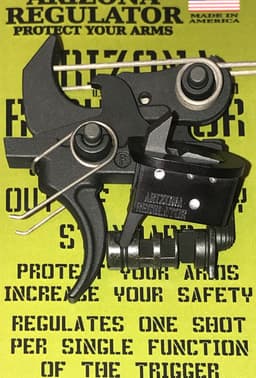
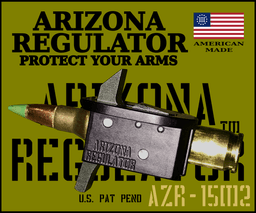
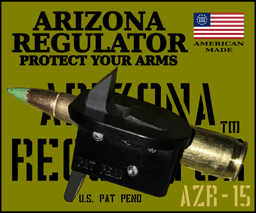
The Arizona Regulator AZR-15 is a mil-spec based forced reset trigger (FRT) system designed for 5.56/.223 AR platforms. The device operates at approximately 750 RPM and requires a full-auto BCG and 5.0+ oz buffer.
Core Mechanics
The trigger functions by: firing one shot via manual trigger function, the BCG moves rearward and engages the cams of an out-of-battery safety, cams move the trigger to safe position where hammer and trigger reengage, then the BCG moves forward and disengages the cams when safely in battery, allowing the next shot.
Setup Method 1 (Standard)
Remove disconnector and spring. Selector in fire position. Insert upper cam in vertical position. Close receiver and push rear take-down pin. Slowly pull charging handle while tapping trigger. Clearance rear of disconnector to 0.040 +/- 0.010 behind and above spring well. Works with Mil-Spec triggers; allows swapping between compatible ARs.
Setup Method 2 (Disco Override)
For Mil-Spec triggers or specialty triggers. Remove disconnector spring during initial setup. Takes approximately 0.060 more length off lower cam leg than Method 1. Reinstall spring after function check.
Setup Method 3
Mil-Spec setup with no disconnector/spring removal. Dedicated FRT-only function.
Compatible Triggers
Mil-Spec (all methods). LaRue MBT 2S (requires approx +/- 0.300 removed from lower cam leg). Other specialty triggers (specific adjustments needed).
BCG Requirements
Full-auto BCG mandatory. Smooth-edged, well-made models function best. Rough/sharp edges should be smoothed and polished.
Buffer Requirements
Minimum 5.0+ oz for 5.56/.223. H3 buffer (5+ oz) recommended for suppressed or SBR configurations. Prevents bolt bounce and light strikes.
Drop-in Conditions
Setup 1 Mil-Spec in loose tolerance guns: full drop-in. Setup 1, 2, or 3 specialty trigger in loose tolerance guns: full drop-in. Tight tolerance ARs may require a few light swipes with a fine file on tip of lower cam leg.
Trigger Tap Adjustment
Key point: obtain enough trigger face movement at apex to prevent binding. Target: approximately thickness of a playing card at contact point. Recommended approach: remove material in 0.002/0.003 increments. Use 4.00 long .500 wide fine double cut file followed by fine stone.
Charging Handle Pull Test
Slowly pull charging handle rearward without touching trigger. Should feel zero resistance from mechanism. Trigger should tap throughout BCG motion indicating proper clearance.
Disconnector Clearancing (Method 1)
Clearance rear of disconnector to 0.040 +/- 0.010 behind and above spring well.
Function Check Sequence
Lock BCG to rear. Hit bolt stop to release. BCG moves forward and disengages mechanism. Allows trigger pull. Hammer drops.
Interchangeability Notes
Same AZR-15 can swap between multiple ARs with matching trigger types. Exception: moving from very tight to very loose rig may require additional adjustment. Recommend setting up all guns simultaneously on bench, then test in others.
Troubleshooting
BCG Stops/Trigger Goes Solid: Remove material from lower cam leg or trigger bar contact surface in increments. BCG Stops but Trigger Still Taps: Gun needs additional mil-spec disconnector tail reduction; mark with dye to identify rub points. BCG Doesn't Stop, Trigger Taps Full Travel: Loose setup; no adjustment needed. Upper Cam Excessive Wear: BCG likely sharp/rough at disengagement area; smooth with fine stone or improve BCG quality. Light Primer Strikes During Rapid Fire: Bolt bounce issue; increase buffer weight beyond current specification. Light Strikes on Last Round Only: Typical H2 carbine buffer issue; upgrade to minimum 5+ oz buffer. Won't Reset After Over-Clearancing: Method 1 over-clearance: Switch to Setup Method 2 Mil-Spec with new disconnector. Method 2 over-clearance: Switch to LaRue MBT trigger. Specialty trigger over-clearance: Use Setup 2 Mil-Spec or LaRue MBT.
Tech Support
Call 480.305.3236 (no email support). Complete printed tech manual included with each order.
Critical Warnings
Do not adjust upper cam during setup. Do not remove material from upper cam to eliminate resistance. Modifying upper cam creates self-induced function/timing issues. Use mil-spec compliant parts throughout. Verify all components meet mil-spec parameters before operation.